
What Burnout Taught Danielle DeRuiter-Williams About Building Resilient Organizations
Danielle DeRuiter-Williams knows burnout all too well. As co-founder of a DEI consultancy that scaled from six to 20 employees in just half a year after George Floyd's murder, she lived through the kind of growth that looks like success but feels like a slow unraveling.
At her lowest point, Danielle was inflamed, not sleeping, recovering from COVID, and starting to realize that she needed much more than a change of scenery. She saw that she was losing herself to the work she believed so much in. Today, she can look back and understand this was not a personal shortcoming, but a systems-level failing that happens regularly.
"It is very easy for folks doing equity work to identify with their job to their own detriment," she points out. "And when everyone around you is doing the same thing, it's hard to know what's normal and what's actually a problem." That pattern — of mission-driven people running themselves into the ground and orgs not doing enough to support their teams — is what Danielle has spent the last several years learning to recognize, name, and disrupt.
She joins DevelopWell today as a Managing Director of Growth and Partnerships and a Principal, bringing that hard-won perspective to a moment that demands it. As a Black woman who has done equity work through some of the most turbulent chapters in recent history and paid a personal price for it, she understands firsthand why the following resilience practices matter.
5 practices for building resilience within your organization
#1: Make mindfulness the norm
Danielle sees mindfulness as foundational to everything else. "If we don't check in with ourselves first and have a practice of introspection and reflection, it will be felt in all of those really important realms of interpersonal interaction," she says.
In other words, if you aren't good with yourself, it will affect how you give and receive feedback, navigate conflict, and communicate under pressure.
Mindfulness doesn't have to mean a lengthy practice or a formal program. It can be as simple as starting a meeting with two quiet minutes before diving into the agenda. Whenever Danielle implements that type of pause pre-meeting, people ask if they can do it more often. And why not? It only takes a few minutes of everyone's time and really sets the stage for a calmer, more focused time together.
#2: Redesign for spaciousness
Leaders often think about resilience as something individuals need to develop on their own time. However, the structure of how we work either supports people or depletes them. That's a design choice organizations make, whether they realize it or not.
Danielle is a champion of what's sometimes called "Bare Minimum Mondays," which gives people permission to ease into the week, focus on what actually matters, and not jump into the workweek at full speed. At DevelopWell, we instituted "Quiet Fridays" for a similar reason: We want people to have time to go heads-down without constant pings and interruptions.
Extended office closures, such as "Summer Fridays" off or a week off during the summer or holiday break, can also work — but if you can, choose more consistent practices (like the weekly "Quiet Friday") instead of the occasional burst of time off. Consistent breathing room will have more of a cumulative impact than a single week off each year.
When leaders push back against these initiatives, citing business needs and client demands, Danielle's response is direct: "Turnover is expensive. Recruitment is expensive. You can quantify how much it costs every time you lose an employee. If you were to add up the ROI on a quiet Friday or a Bare Minimum Monday, quite likely you'll see it has pretty solid returns."
#3: Invest in manager development
Managers are the most direct line between an organization's values and the daily experience of team members within it, and yet most managers were never taught how to effectively manage.
Danielle recommends that managers start with an honest inventory of their own experience being managed. What worked? What eroded trust? How do you see that playing out in your own management style? When you compare yourself against your inventory, are you managing from a proactive or a reactive place?
"If you've been in scenarios where you received really poorly delivered feedback, you may now avoid giving feedback because you've had such traumatic experiences," Danielle explains, "but that doesn't serve your team." The goal isn't to replay old patterns or frantically avoid them — it's to develop the self-awareness to recognize them, and then build the skills to do better.
#4: Ask your team what they need, and build trust that makes honest answers possible
Most leaders ask their teams how they're doing in environments where honesty feels risky. The question seems straightforward, but the conditions that make a genuine answer possible are harder to build, and they start with how leaders show up.
"The two most important things are reciprocity in vulnerability and honesty," Danielle says. "The more a leader can name their own hard days, their own uncertainty, their own evolving thinking, the more it creates permission for others to do the same."
Additionally, be aware of power dynamics and hierarchies. Even if it's not something that affects how you interact with others, it may affect how others read you. For example, Danielle tends to communicate in fully-formed thoughts, even when she's spitballing ideas, and this can influence team members to pull back on their own ideas.
So she's learned to be explicit: flagging when she's genuinely open, explaining her brainstorming process, and signaling when things are suggestions versus directives. The goal is to create space for team members to push back without worrying that they're contradicting her decisions. Small practices like that can have a big impact on people's psychological safety and their willingness to be honest.
#5: Create structured space for courageous conversations
"Open doors" aren't enough. Good intentions aren't enough. People need infrastructure: specific, protected, purposefully designed spaces where hard things can be named, heard, and responded to.
This is especially true for staff who carry identities most exposed to external pressures. "If you're part of an organizing organization and there's a big push — against ICE, against rollbacks, against whatever the current moment demands — you might have a very individual bearing of that burden," Danielle acknowledges.
Identity-based caucuses and Employee Resource Groups (ERGs) exist precisely to create that kind of holding space. We'll be formally launching these as a DevelopWell service offering in June (reach out to Danielle directly to learn more), but you can start now with things like brown bag sessions for team members, accompanied by clear community agreements about how to show up and what the purpose of the group is.
Danielle's seen what's possible when these spaces are done well. In one organization, a series of caucuses for staff of color surfaced specific pain points and concrete recommendations that leadership could act on directly. These insights would not have come up during anonymous surveys or any other way — that's the value of a dedicated, focused space.
Building the conditions for equity to survive
Equity doesn't sustain itself, and neither do the people who do this work. The organizations that will still be standing when this political moment eventually shifts are the ones that treated their people as the most important infrastructure they have, and made deliberate choices to build the conditions that allowed them to keep showing up.
Resilience isn't a buzzword. It's what happens when leaders get honest about what their people actually need, and then do something about it. Danielle learned the importance of resilience the hard way, and now she's here to help orgs build the right conditions from the start.
If any of what you've read here resonates, whether you're navigating a specific challenge or just starting to ask better questions about how your organization supports its people, we'd love to talk. Get in touch with Danielle below, and be sure to ask about our upcoming DEIJ service line offerings.
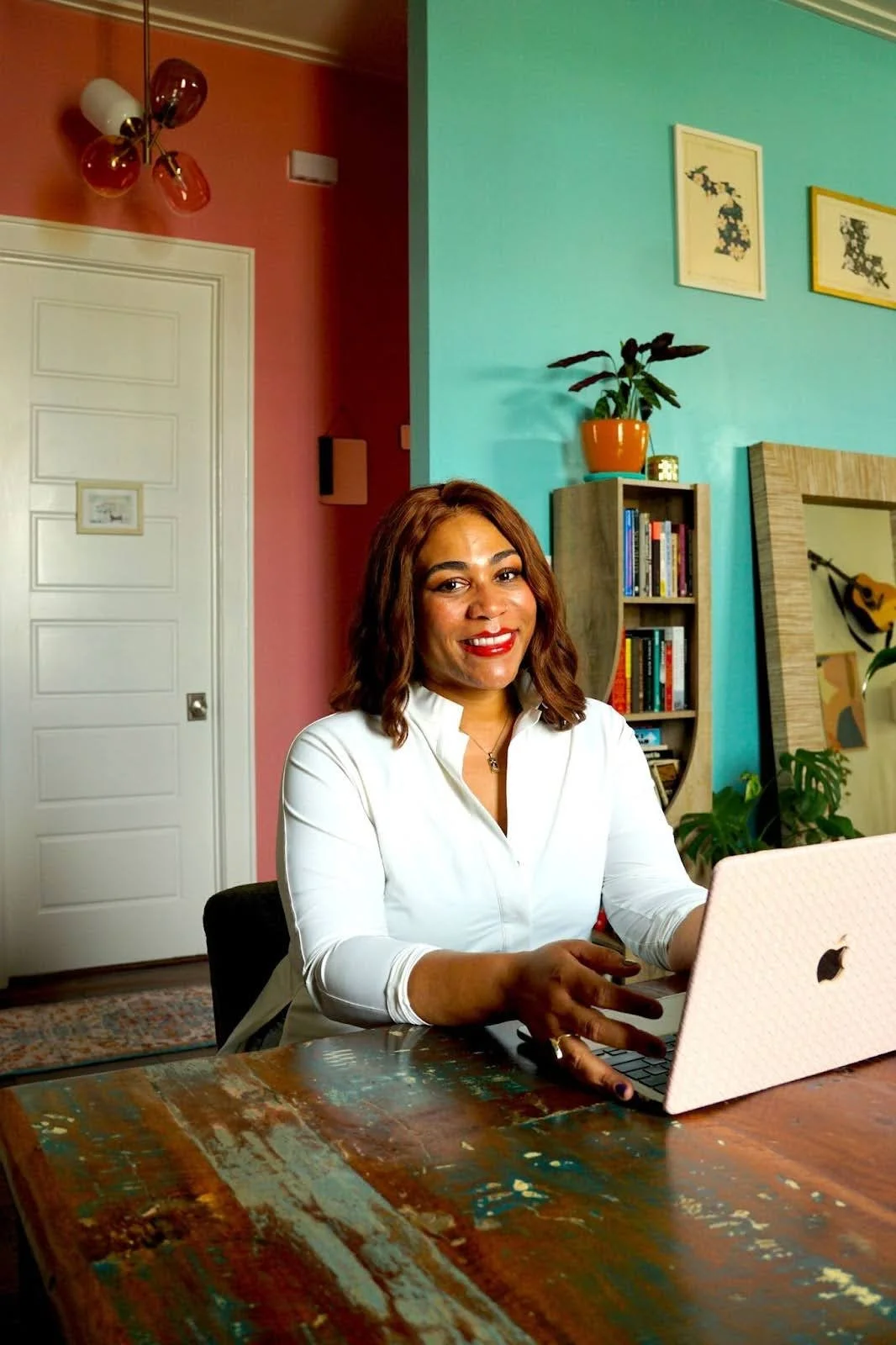
Danielle DeRuiter-Williams is Managing Director of Growth and Partnerships and Principal at DevelopWell, bringing over a decade of experience in organizational development, DEI strategy, people operations, and business development across nonprofits, startups, and social-change organizations. As co-founder of The Justice Collective and founder of Just Good Advisors, she has built growth functions, developed service offerings, and led culture change efforts from the inside out. She joins DevelopWell to expand its DEIJ practice and deepen its work with mission-driven organizations navigating this moment.